The census will be conducted in two phases, Minister Ashwini Vaishnaw makes a major announcement, the budget will be ₹11,718 crore

Ashwini Vaishnaw
Union Minister of Information and Broadcasting, Ashwini Vaishnaw, announced that three major decisions were taken in the Cabinet meeting today. One of these relates to the census. The reference date for the census has been set as March 1, 2027, at 00:00 hours. The census will be conducted in two phases: the first phase will run from April to September 2026, while the second phase will be completed in February 2027. The government has also approved the Coal Bridge Scheme. Ashwini Vaishnaw made a significant announcement regarding this scheme.
Union Minister Ashwini Vaishnaw announced that the 2027 census will be the country’s first digital census. The Union Cabinet has approved a budget of ₹11,718 crore for this. A significant change in this upcoming census is the inclusion of caste-based enumeration. Regarding the Cabinet decisions, Minister Vaishnaw also mentioned the country’s increasing domestic production capacity. He stated that the increase in domestic production is saving the country approximately ₹60,000 crore in foreign exchange. This reflects the positive outcome of the economic decisions taken by the government.
Wider Participation in Coal Linkage Scheme
The government has approved broader participation criteria under the Coal Linkage Scheme. Union Minister Ashwini Vaishnaw stated that now, in addition to traders, any user will be allowed to participate in the scheme without any restrictions on the end-use of coal. Furthermore, linkage holders will be permitted to export up to 50% of their capacity. However, the export of coking coal will not be allowed. These measures are expected to increase participation, enhance competition, and streamline access to coal for various sectors.
Why is a Census Necessary?
A census is considered the backbone of every country’s policies, plans, and administrative capacity. It not only counts the population but also collects crucial data related to age, religion, language, education, employment status, housing conditions, household amenities, and disability. This data forms the legal basis for determining the boundaries and reservations of Parliament, state assemblies, and local bodies. It also provides a vast data bank for researchers in fields such as demography, economics, anthropology, sociology, and statistics.
Census 2027 Dates and Complete Schedule
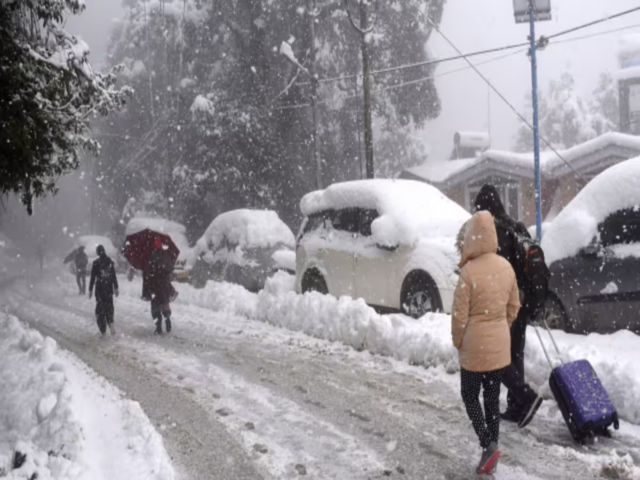
The government has set the reference date for Census 2027 as March 1, 2027, at 00:00 hours. For snow-bound areas, this date has been set as October 1, 2026. The census will be conducted in two phases – the first phase from April to September 2026, while the second phase will be completed in February 2027. In snow-bound areas, the second phase will be conducted in September 2026.
How will the two phases of Census 2027 be conducted?
Phase 1: House Listing and Housing Census (HLO)
This phase will collect detailed data on the condition of houses, facilities available in the house, and housing-related information.
- Duration: April–September 2026
- States/Union Territories will choose a 30-day period
Phase 2: Population Enumeration (PE)
This phase will collect demographic, social, cultural, and economic information.
This will include:
- Age, Gender, Education
- Religion, Mother Tongue, Languages
- Disability, Social Status, Caste
- Occupation, Migration, Fertility details
- Main Period: February 2027
- Revision Round: March 1–5, 2027
- Snow-bound areas: September 2026
- Revision Round: October 1–5, 2026
Census 2027: First Fully Digital Operation
The government aims to make Census 2027 the country’s first digital census. Data will now be collected through a mobile app, which will be available on both Android and iOS platforms. A dedicated portal called the Census Management & Monitoring System (CMMS) has been created for real-time monitoring. This will enable continuous monitoring of crucial stages. Furthermore, a self-enumeration option has also been added for the public this time. This means that people can fill in their household information online themselves if they wish. Census-as-a-Service: Ministries to Receive Clean and Actionable Data
A major change in the new census is that the data will be made available to ministries and government departments in a machine-readable and practical format under the ‘Census-as-a-Service (CaaS)’ model. This will provide unprecedented assistance in policy making, targeting schemes, and administrative preparedness.
3 million Field Functionaries on the Ground; Honorarium Also Provided
This will be the world’s largest statistical exercise, involving approximately 3 million field functionaries, including enumerators, supervisors, master trainers, charge officers, and district/state-level officials. These individuals will perform this additional work alongside their regular duties, and the government has also made provisions for an honorarium for them.
Separate Timeline for Cold Regions and Hilly States
In snow-bound areas of Jammu and Kashmir, Ladakh, Himachal Pradesh, and Uttarakhand, the Population Enumeration (PE) phase will take place in September 2026. Following this, a Revisional Round will be conducted in these areas between October 1-5, 2026.
Awareness Campaign to be Larger than Before
For Census 2027, the government has specifically provisioned for a wider publicity campaign. A special media campaign will be launched across the country to increase awareness, build trust, and ensure participation from every individual. “The focus will be on accurate, authentic, and timely information.
Caste-based enumeration to be included for the first time in Census 2027
The Cabinet Committee on Political Affairs, in its meeting on April 30, 2025, decided that caste enumeration will also be included in the upcoming census. This data will be collected electronically during the second phase, i.e., Population Enumeration (PE).
Employment Generation: 1.02 crore man-days of opportunity
Census 2027 will generate 1.02 crore man-days of employment. Approximately 18,600 technical staff will be deployed locally for about 550 days. This staff will handle tasks related to digital data handling, monitoring, and coordination, which will also improve their future employment opportunities.
Faster Data Release: Easy access down to village and ward levels
The government aims to complete and make the data available across the country in the shortest possible time. With the help of new technologies and visualization tools, micro-data will be made available down to the village and ward levels. This will increase transparency in local planning, resource allocation, and government schemes.
Legal Framework Remains the Same: Survey under the Census Act 1948
Census 2027 will be the country’s 16th census and the 8th since independence. It will be conducted entirely under the Census Act 1948 and the Census Rules 1990, which provide it with legal protection and enforceability.
How India is moving towards self-reliance: A major step in the coal sector
India started commercial mining of coal in 2020. This has led to a significant increase in the availability of domestic coal. In 2024-25, the country achieved a record of producing 1 billion tons of coal in a single year for the first time – a total of 1.048 billion tons. The percentage of coal imports is continuously decreasing, and in 2024-25, it decreased by 7.9%. This resulted in foreign exchange savings of approximately ₹60,700 crore. The partnership between Indian Railways and the coal sector has also strengthened. Last year, the Railways 823 million tons of coal were transported through this route. As a result, coal stocks at the country’s power plants are now at record levels.