A ₹119,000 crore defense deal, 220 advanced fighter jets – a deal that no one was interested in – suddenly turned into a resounding success
b
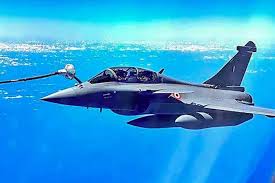
Every country is aware of the importance of air power in modern warfare. This is why no country is leaving any stone unturned in acquiring all the necessary equipment for aerial strikes. Whether it’s long-range missiles, drones, or fighter jets, there is a fierce competition globally to acquire them. India is also adapting itself to the changing environment. Along with the Integrated Air Defence System (Mission Sudarshan Chakra), the process of developing hypersonic missiles is in full swing. India is also working on another important project: developing a 5th generation fighter jet using indigenous technology. The AMCA project is underway with this in mind. There is also a strong emphasis on manufacturing fighter jet engines domestically to completely eliminate dependence on other countries. Amidst all this, work is also underway on a project that is currently being widely discussed. Initially, even defense experts didn’t give it much importance, but today it is becoming crucial for the country’s air power. Its importance can be gauged from the fact that orders worth approximately 1.25 lakh crore rupees have already been placed for it. This is Hindustan Aeronautics Limited’s (HAL) Tejas fighter jet project.
The Indian Air Force has a fleet significantly smaller than its required squadron strength. This situation exists while Pakistan on one side and China on the other continue to plot against India. Under the HAL Tejas project, fighter jets are being developed in several variants. Although the project has faced setbacks due to disruptions in the engine supply chain, its success is now being recognized not only in India but also in other countries around the world. It’s worth noting that 42 squadrons are sanctioned for the Air Force, but currently, the Air Force is operating with only 30 or even fewer squadrons. With the threat from Pakistan on the western border and China on the eastern and northern borders remaining constant, strengthening the Air Force is crucial. This is why India is working to prepare itself for a potential military conflict on two fronts simultaneously. HAL’s Tejas project is very important in this mission. HAL has received orders worth thousands of crores of rupees from the IAF and other branches of the armed forces. As part of a plan to accelerate fighter jet production, Defense Minister Rajnath Singh inaugurated the third production line for the Tejas fighter jet at HAL’s plant in Nashik on October 17th this year.
| HAL: The development story of the Tejas fighter jet |
| Order Year | Tejas variant | How many jets? |
| March 2006 | Tejas Mk1 (IOC) | 20 |
| December 2010 | Tejas Mk1 (FOC) | 20 |
| February 2021 | Tejas Mk1A | 83 |
| September 2025 | Tejas Mk1A | 97 |
Tejas: The Conqueror of the Skies
From a modest beginning of just 20 aircraft in 2006 to a massive deal for 97 aircraft in 2025, the indigenous Tejas light combat aircraft program has quietly become one of independent India’s biggest defense procurement success stories. According to a report by the Indian Defence Research Wing, HAL has received four major orders from the Air Force and other branches of the armed forces over the past 19 years. In total, HAL has received orders for 220 fighter aircraft worth approximately ₹1,19,172 crore. This amount is equivalent to the cost of several major global projects. In 2006, when the first contract for 20 Initial Operational Clearance (IOC) aircraft was signed for ₹2,813 crore, many considered it merely a symbolic step to keep the Tejas program alive. At that time, the per-aircraft cost was high due to heavy development expenses and a newly established production line. In 2010, an order was placed for 20 Final Operational Clearance (FOC) aircraft. The price nearly doubled, but in return, the Air Force received a fully combat-ready aircraft with features like in-flight refueling, long-range missiles, and improved avionics.
The real turning point came in February 2021, when the Ministry of Defence signed the long-awaited contract for 83 Mk1A aircraft for ₹48,000 crore. This was, at the time, the largest ‘Make in India’ defense deal ever. The Mk1A featured an AESA radar, a modern electronic warfare system, in-flight refueling capability, and a significant reduction in dependence on foreign components. The latest order came in September 2025, with an agreement for 97 more Mk1A fighter aircraft for ₹62,370 crore. This marks a significant milestone. This not only increases the total number of Tejas aircraft to 220 (approximately 11 Air Force squadrons), but the slight increase in cost per aircraft reflects the inclusion of the new indigenous ‘Uttam’ AESA radar, improved weapons, and a greater proportion of Indian-made components.
Private Sector Benefits
With these orders, the Indian Air Force will completely phase out its remaining MiG-21 squadrons by the end of this decade. Tejas Mk1A squadrons have already been deployed in the western and southern sectors. The 2025 agreement also ensures that HAL’s production line in Nashik will continue to operate without interruption until the 2030s. The program has also significantly benefited the private sector. More than 500 MSMEs are now supplying components for the Tejas. Companies like Tata Advanced Systems and L&T are also preparing to further support the assembly line.
Export Opportunities
The Tejas story doesn’t end with 220 aircraft. The more powerful Tejas Mk2 (expected to have its first flight in 2026-27) and the twin-engine fifth-generation AMCA fighter will build upon this foundation. If export opportunities materialize with countries in Southeast Asia, Africa, and Latin America, further orders for the Mk1A line could also be secured.