Uttarakhand: The new law (VB-G RAM G) is undermining the fundamental principle of the “right to work” under MNREGA – Yashpal Arya, Leader of the Opposition
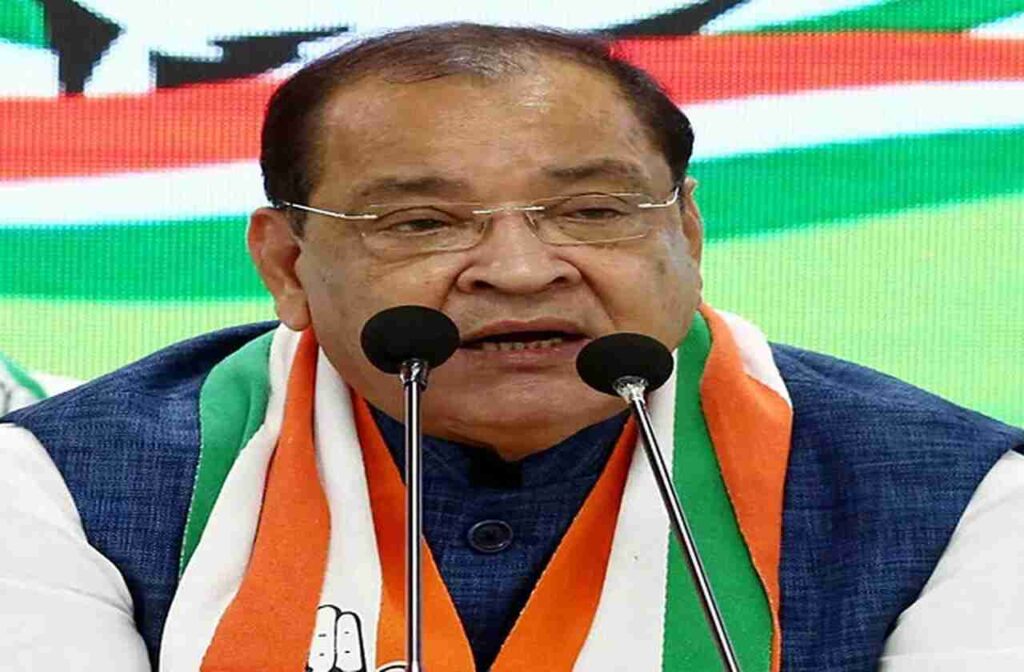
Yashpal Arya, the Leader of the Opposition, stated that the Mahatma Gandhi National Rural Employment Guarantee Act (MGNREGA) has been renamed as the Viksit Bharat Guarantee for Employment and Livelihood Mission (Rural). He said the new law (VB-G RAM G) is undermining the fundamental principle of the “right to work” enshrined in MGNREGA.
He further stated that it’s not just Mahatma Gandhi’s name that has been removed from the scheme; several other changes are also extremely concerning. Previously, the central government contributed 90 percent and the state government 10 percent to the scheme. MGNREGA was a scheme for unskilled laborers, with the budget managed by the central government. However, now the central government’s contribution will be only 60 percent, and the state government’s contribution will be 40 percent.
Arya said that MGNREGA was a demand-driven scheme; if a worker demanded work, the central government was obligated to provide it and pay them. In the new scheme, work will not be provided based on demand. Now, work will be provided only based on the central government’s pre-determined standards and budget allocation. If the funds run out, the right to work ceases. If more work is provided than the allocated funds, the state government will have to bear the cost.
He said that the legal guarantee of employment scheme has been transformed into a centrally-driven publicity scheme, with the states bearing the expenses. Under MGNREGA, work was implemented through Gram Sabhas and Panchayats, which planned the work based on local needs. This further strengthened the Panchayats, the first tier of democracy.
Arya said that the new scheme mandates the use of GIS tools, PM Gati Shakti, and the central government’s digital network. Local priorities will now be filtered through the Viksit Bharat National Rural Infrastructure Stack. Biometrics, geo-tagging, dashboards, and audits are mandatory. Clearly, millions of rural laborers who are not familiar with this technology will be deprived of work. He added that the central government will decide how much budget each state will receive. There will be criteria, but we know that in this matter, it will be decided what the opposition-ruled governments will receive and on what basis.
The Leader of the Opposition said that laborers will not get work for two months during the agricultural season. This employment guarantee act will not provide any guarantee of employment for two months. This means the laborers have been left to their own devices. Now, whether their employers make them work for meager wages or exploit them in other ways, the government doesn’t care. Changing the name of a scheme is not just a paper change – it costs crores of rupees from the government treasury, the burden of which falls directly on the public.
He said the real question is whether changing the name will change the lives of the village laborers? Will it reduce unemployment or inflation? This change is a direct attack on the very essence of the Mahatma Gandhi National Rural Employment Guarantee Act (MNREGA). Reducing funds, eliminating demand-driven work, and shifting the burden onto the states, all combine to make the laborers insecure.
Arya said that not a single step is being taken towards eradicating poverty in the country; instead, everything is being done to eliminate the poor. By centralizing wealth, 90 percent of the people are being fooled with the dream of a developed India based on the income of only 10 percent of the population. When the people of the country are hoping for employment and relief, the government should abandon symbolic politics and work on the ground realities.
Yashpal Arya said that the Congress party will strongly oppose such a provision. We will not allow the rights of crores of poor people, laborers, and workers to be snatched away by those in power. Yashpal Arya, Leader of the Opposition, said that the Mahatma Gandhi National Rural Employment Guarantee Act has been renamed as the Developed India Guarantee for Employment and Livelihood Mission (Rural). The new law (VB-G RAM G) is weakening the fundamental principle of the “right to work” under MNREGA.
He said that not only has Mahatma Gandhi’s name been removed from MNREGA, but several other changes are also extremely worrying. Earlier, the central government’s contribution to this scheme was 90 percent and the state government’s contribution was 10 percent. MNREGA was a scheme for unskilled workers, and its budget was with the central government, but now only 60 percent of the contribution will be from the center and 40 percent from the state government. Arya said that MGNREGA was a demand-driven scheme; if a worker demanded work, the central government was obligated to provide it and pay for it. Under the new scheme, work will not be provided based on demand. Now, work will only be available based on the central government’s pre-determined standards and budget allocation. Once the funds run out, the right to work ends. If more work is provided than the allocated funds allow, the state government will have to bear the cost.
He said that the legal guarantee of employment scheme has been transformed into a centrally controlled propaganda scheme, with the states bearing the expenses. Under MGNREGA, work was implemented through Gram Sabhas and Panchayats, which planned work based on local needs. This further strengthened the Panchayats, the first tier of democracy.
Arya said that the new scheme mandates the use of GIS tools, PM Gati Shakti, and the central government’s digital network. Local priorities will now be filtered through the Developed India National Rural Infrastructure Stack. Biometrics, geo-tagging, dashboards, and audits are mandatory. Clearly, millions of rural laborers who are not familiar with this technology will be deprived of work. He added that the central government will decide how much budget each state receives. There will be criteria, but we know how much the opposition-ruled states will receive and on what basis this will be decided.
The Leader of the Opposition said that laborers will not get work for two months during the farming season. This employment guarantee act will not provide any guarantee of employment for these two months. This means the laborers have been left to their own devices. Now, whether someone makes them work for a pittance of grain or exploits them in some other way, the government doesn’t care. Changing the name of a scheme is not just a paper change – it costs crores of rupees from the government treasury, the burden of which falls directly on the public.
He said the real question is whether changing the name will change the lives of the village laborers? Will it reduce unemployment or inflation? This change is a direct attack on the very spirit of the MNREGA employment guarantee. Reducing funds, eliminating demand-driven work, and shifting the burden onto the states, all of this together makes the laborers vulnerable.
Arya said that not a single step is being taken towards eradicating poverty in the country; everything is being done to eliminate the poor. By centralizing wealth, only 10 percent of the people are benefiting, while the remaining 90 percent are being fooled with the dream of a developed India based on the income of this small percentage. When the people of the country are hoping for employment and relief, the government should abandon symbolic politics and work on the ground realities.
Yashpal Arya said that the Congress party will strongly oppose such a provision. We will not allow the rights of crores of poor people, laborers, and workers to be snatched away by those in power.