Semiconductors, critical minerals, green hydrogen… India and Germany have signed agreements on these issues
b
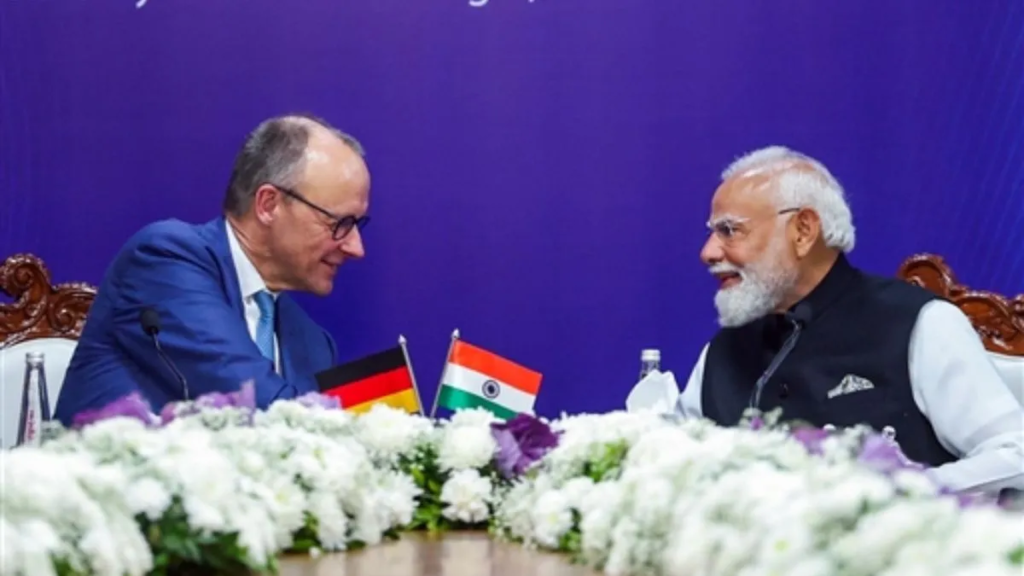
The bilateral summit between Prime Minister Narendra Modi and German Chancellor Friedrich Merz in Ahmedabad has given new momentum to the strategic partnership between India and Germany, the European Union’s largest economy. Viewing each other as complementary partners in the new global order, the two leaders agreed to strengthen cooperation in defense, economic collaboration, semiconductors, critical minerals, green hydrogen, and security cooperation in the Indo-Pacific region.
By choosing India as his first destination in Asia since assuming office last year, Chancellor Merz sent a significant signal regarding Germany’s commitment to relations with India. Similarly, PM Modi, by welcoming the German Chancellor in his hometown and signing a long-term agenda for bilateral relations, clearly demonstrated India’s interest. The two leaders signed 20 joint declarations and seven memoranda of understanding on bilateral cooperation, reflecting the strength of mutual trust and partnership amidst global challenges.
Emphasis on deepening cooperation in the Indo-Pacific region
In addition to enhancing mutual cooperation in defense and trade, the talks covered pressing global issues such as Ukraine, Iran, and Venezuela. Both countries emphasized deepening cooperation in the Indo-Pacific region, which holds strategic importance in the context of China’s growing assertiveness. Modi and Merz expressed optimism about the possibility of a Free Trade Agreement (FTA) at the India-EU Forum this month, which could further strengthen economic ties between the two sides.
Key announcements include the development of a new roadmap to strengthen defense industrial cooperation, focusing on joint development and production. A CEO Forum will be established between the two countries to promote economic cooperation. Collaboration will be established in critical sectors such as semiconductors and critical minerals, ensuring the resilience of global supply chains. Separate joint declarations were made in the areas of gas, green hydrogen, and bioeconomy, underscoring the commitment of both countries to addressing climate change. PM says it will be a game-changer
In addition, Germany will provide visa-free transit facilities to Indian passport holders, which will facilitate people-to-people contact. A 1.5 track dialogue will be initiated for deeper ties in diplomacy and defense, while systematic bilateral talks will begin for cooperation in the Indo-Pacific region. These steps will not only strengthen bilateral relations but also contribute to global stability.
At the joint press conference with Chancellor Scholz, PM Modi said, “We are jointly advancing new projects in areas such as environment, energy, and urban development. The new mega-project between companies from both countries in green hydrogen will prove to be a game-changer for the energy of the future. We are working together for a secure and reliable supply chain. The agreements being made today on all these subjects will give new momentum and strength to our cooperation.”
Emphasis on Global Order
German Chancellor Scholz also emphasized the global order, saying, “We are committed to an international order in which we can live freely and securely. This order is being increasingly undermined by power politics and outdated ways of thinking. Russia’s war against Ukraine is a clear example of this development. For this reason, we want to further deepen our security policy cooperation. This includes joint air force and naval exercises in the Indo-Pacific region, military port visits, and new consultation formats. We are paying particular attention to close cooperation between our defense industries to promote joint development, production, and global supply chains.”
This summit took place at a time when the global economy is grappling with uncertainties. India’s business relations with Germany will be further strengthened after an agreement on the FTA is reached at the India-EU summit later this month. India also views the European Union as a power in the multipolar global order and is strengthening its relations with its member countries, both collectively and individually. Germany and France are the most prominent among them. French President Emmanuel Macron is also visiting India next month.