Uttarakhand: The Secretary of Disaster Management reviewed the departmental progress under the Sendai Framework and instructed that an action plan be prepared within a week
b
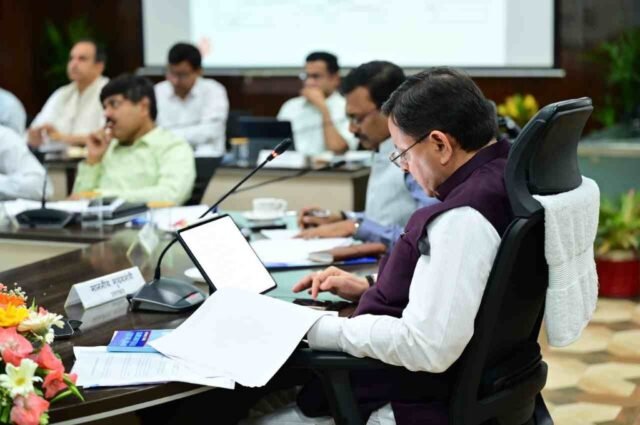
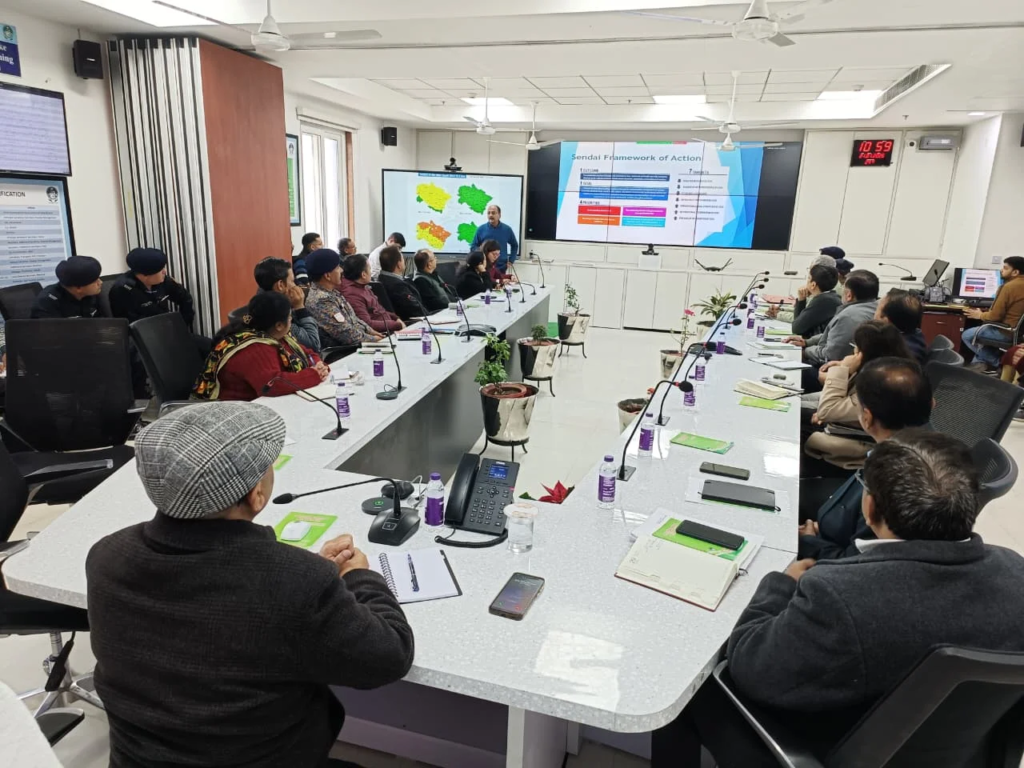
On Wednesday, Secretary of Disaster Management and Rehabilitation, Mr. Vinod Kumar Suman, reviewed the progress of work being done by various state departments under the Sendai Framework. In a meeting held at the State Emergency Operations Center, he instructed officials to ensure the timely achievement of the goals of the Sendai Framework (2015-2030). During the meeting, he directed all departments to submit their respective action plans within a week.
During the review meeting, Secretary of Disaster Management and Rehabilitation, Mr. Vinod Kumar Suman, stated that the Sendai Framework provides a global framework for minimizing loss of life, the number of people affected, economic losses, and damage to basic services and critical infrastructure caused by disasters. For its effective implementation, all state departments will have to prepare their departmental disaster management plans, and the establishment of a disaster management cell in each department will be ensured.
Mr. Suman said that the first priority of the Sendai Framework is understanding disaster risk. To achieve this goal, the systematic collection, analysis, and use of disaster-related data are essential. This includes the scientific assessment of damage caused by disasters, understanding the impacts on social, economic, health, education, environment, and cultural heritage, capacity building of all stakeholders through training and education, and promoting the integration of scientific knowledge with local and traditional experiences.
Speaking on the second priority, strengthening disaster risk management, he said that this requires strengthening technical, financial, and administrative systems. Rules related to land use, urban planning, building codes, environmental protection, and health and safety standards will be strengthened and their strict compliance will be ensured. Along with this, the institutional framework related to disaster risk reduction at the district and state levels will be strengthened.
Regarding the third priority, investment in disaster risk reduction, he said that plans to reduce risk in urban and rural areas will be promoted. Disaster risk assessment, mapping, and management will be mandatorily included in development plans, and long-term strategies will be adopted to secure the state’s critical infrastructure and services. Special attention will also be given to increasing the number of departments and institutions adopting risk reduction strategies at the local, district, and state levels. Regarding the fourth priority, preparedness for and effective response to and reconstruction after disasters, he stated that pre-disaster preparedness, public awareness, rapid response capabilities, availability of necessary resources, and strengthening of technical and logistical capabilities are extremely important. Post-disaster rehabilitation and reconstruction efforts will adopt the “Build Back Better” concept to reduce the risk of future disasters. This also emphasizes strengthening multi-hazard early warning systems and the timely and effective dissemination of warnings.
Secretary of Disaster Management and Rehabilitation, Mr. Vinod Kumar Suman, instructed all departments to mandatorily include provisions related to disaster risk reduction in their plans, programs, and activities. Priority should be given to assessing potential threats to departmental assets and infrastructure, developing and implementing plans to reduce risks, public awareness, training, research, and capacity building. Regular reviews will be conducted at the state and district levels to achieve the goals of the Sendai Framework, and a robust and comprehensive disaster risk reduction mechanism will be developed through inter-departmental coordination.
In the meeting, Senior Disaster Risk Reduction Expert Dr. P.D. Mathur explained that the key targets set under the Sendai Framework include reducing mortality rates from disasters, reducing the number of affected people, reducing economic losses relative to GDP, reducing damage to health, education, and other basic services and critical infrastructure, and increasing the number of departments adopting disaster risk reduction strategies.
Present on the occasion were Joint Chief Executive Officer Mohd. Obaidullah Ansari, Director of ULMCC Dr. Shantanu Sarkar, officers from various line departments, and experts from the USDMA.
What needs to be done under the Sendai Framework:
👉 A departmental disaster management plan will be prepared by each department.
👉 Standard operating procedures and contingency plans will be prepared for all major disasters.
👉 A disaster management cell will be established in each department.
👉 A nodal officer will be nominated for coordination with the District Disaster Management Authority.
👉 Disaster risk reduction and climate change adaptation will be incorporated into all schemes and projects.
👉 Hazard, risk, vulnerability, and capacity assessments of departmental assets will be conducted.
👉 Safety audits of all buildings, structures, and infrastructure will be carried out.
👉 All assets will be mapped using GIS and classified into safe and unsafe categories.
👉 Strict adherence to building bylaws, safety standards, land use, and zoning regulations.
👉 Seismic micro-zoning, flood, and landslide zoning will be incorporated into the plans.
👉 A monitoring mechanism will be established at the state, district, and departmental levels.
👉 Strengthening and reconstruction of vulnerable infrastructure will be carried out based on safety audits.
👉 Multi-hazard resistant construction techniques will be adopted in all new projects.
👉 Construction and maintenance of retaining walls, embankments, shelters, and flood protection structures will be undertaken.
👉 All departments will establish systems for receiving and disseminating early warning messages.
👉 Relief camps, safe open spaces, and evacuation routes will be identified and mapped.