Uttarakhand: Recitation of verses from the Bhagavad Gita has been made mandatory in schools across the state, and it has also been included in the state curriculum framework
b
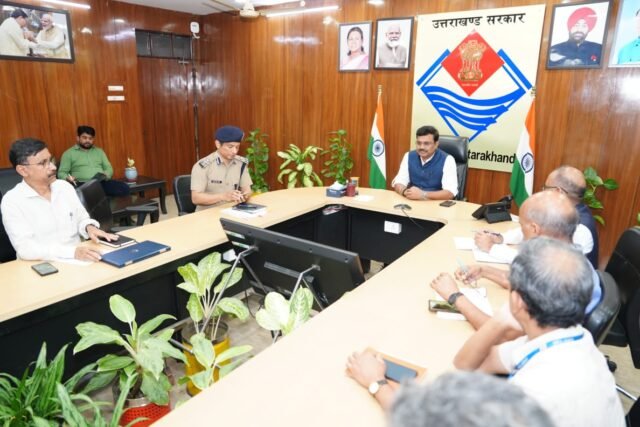
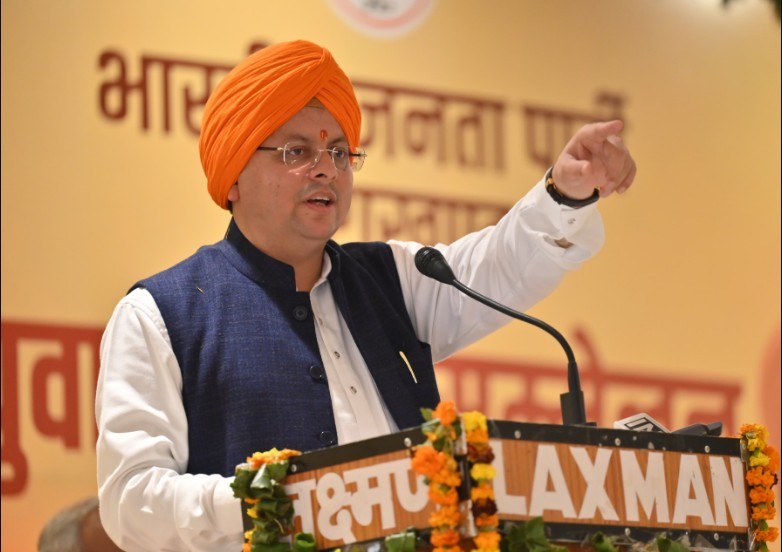
Chief Minister Pushkar Singh Dhami announced on Sunday that the government has made the recitation of verses from the Bhagavad Gita compulsory in schools. The aim is to connect students with Indian culture, moral values, and philosophy of life, paving the way for their all-round development.
The Chief Minister made this statement in a post on the social media platform X. In a video post, he mentioned the historic Katarmal Sun Temple in Almora district. Dedicated to Lord Surya, this temple is a testament to the exquisite architecture and deep devotion of the Katyuri period. Emphasizing the temple’s significance, CM Dhami said it reflects Uttarakhand’s glorious history and vibrant cultural tradition.
The Education Department had issued this directive
The Education Department had issued a directive requiring teachers to periodically explain verses from the Bhagavad Gita and educate students on how the principles of the Bhagavad Gita develop values, behavior, leadership skills, decision-making, emotional balance, and scientific thinking. Students should also be informed that the teachings given in the Shrimad Bhagavad Gita are based on Sankhya, psychology, logic, behavioral science, and moral philosophy, which are useful for all humanity from a secular perspective.
Inclusion of the Bhagavad Gita and Ramayana in the State Curriculum Framework
On the instructions of Chief Minister Pushkar Singh Dhami, the Shrimad Bhagavad Gita and Ramayana have been included in the State Curriculum Framework. According to Dr. Mukul Kumar Sati, Director of Secondary Education, the textbooks are proposed to be implemented from the next academic session, in accordance with the recommendations of the State Curriculum Framework for school education. The Director of Education stated, “The Shrimad Bhagavad Gita is considered a guide in every aspect of life. It also has a scientific basis. It is not only a religious text but also an excellent treatise on the science, psychology, and behavioral science of human life. It contains scientific arguments for human behavior, decision-making, duty, stress management, and living a wise life.” The Shrimad Bhagavad Gita can prove to be a milestone in shaping students into better citizens in schools.
Mahabharata to be included in the curriculum
The Education Department has included the Mahabharata in the state curriculum framework under the new education policy. This has been approved by the government. Children in both government and private schools will be able to study it as part of the curriculum. According to Ravi Darshan Topal, State Coordinator of the State Curriculum Framework, the NCERT curriculum is currently in effect in state schools. Under the NEP, this curriculum will undergo a 20 to 30 percent change. As part of this, various episodes from the Ramayana and Mahabharata may be included in the curriculum.
The history of the state movement will also be taught
Early grade students in Uttarakhand government schools will study the history of the state movement as well as the sacrifices of the immortal martyrs of Kargil. Following the Chief Minister’s announcement, the State Council of Educational Research and Training has prepared the book “Hamari Virasat aur Vibhutiyan” (Our Heritage and Vibhutiyan), which has been included in the curriculum as a supplementary textbook for social sciences for classes six to eight.