Pricing Policy of Costly Medicines

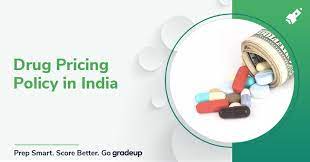


The extant National Pharmaceutical Pricing Policy (NPPP), notified on 7th December, 2012, has been formulated with an objective to put in place a regulatory framework for pricing of drugs so as to ensure availability of essential medicines at reasonable prices while providing sufficient opportunity for innovation and competition to support the growth of pharma industry. The policy made a shift from earlier ‘cost based’ pricing under the Drug Policy, 1994 to ‘market based’ pricing.
In pursuance of NPPP, 2012, the Government notified the Drugs (Prices Control) Order, 2013 (DPCO-2013). As per the provisions of DPCO, 2013, the ceiling price of all scheduled formulations appearing in National List of Essential Medicines (NLEM), are fixed by National Pharmaceutical Pricing Authority (NPPA) and are uniform throughout the country. All the manufacturers of these drugs are required to sell their product equal to or lower than the ceiling price. Further, NPPA monitors the prices of non-scheduled drugs so as to ensure that the increase in their Maximum Retail Price (MRP) is not more than 10% of what was prevalent during preceding twelve months.
The information was given by the Union Minister of Chemicals and Fertilizers, Shri Mansukh Mandaviya in a written reply in the Lok Sabha today.
Generic Medicines Outlets to provide generic medicines to common people at affordable prices
With an objective of making quality generic medicines available at affordable prices to all, Pradhan Mantri Bhartiya Janaushadhi Pariyojana (PMBJP) was launched by the Department of Pharmaceuticals, Ministry of Chemicals & Fertilizers in the year 2008. Under the Scheme, dedicated outlets known as Pradhan Mantri Bhartiya Janaushadhi Kendras (PMBJKs) are opened to provide generic medicines at cheaper rates to the citizens. Government has set a target to open 10,500 Kendras across the country by March 2025.
As on 31.12.2021, about 8,640 Pradhan Mantri Bhartiya Janaushadhi Kendras (PMBJKs) have been opened across the country, out of which about 276 PMBJKs are functioning in the State of Bihar. State/Union Territory-wise list of PMBJKs is enclosed as Annexure.
Generic drugs are also commonly used drugs. The product basket presently comprises of 1,451 medicines and 240 surgical items covering all major therapeutic groups such as Cardiovascular, Anti-cancers, Anti-diabetics, Anti-infectives, Anti-allergic, Gastro-intestinal medicines, Nutraceuticals, etc. These medicines are available through more than 8,600 PMBJKs functioning across the country.
There is no shortage of generic medicines in PMBJKs. Pharmaceuticals & Medical Devices Bureau of India (PMBI), the implementing agency of PMBJP is doing proper forecasting and inventory management regularly to ensure availability of medicines and surgical items on a continuous basis at PMBJKs, including at 139 PMBJKs functioning in the State of Rajasthan as on 31.12.2021.
Annexure
| Statement referred to in part (a) & (b) of Lok Sabha Unstarred Q. No. 626 for 04.02.2022 raised by Shri Mahabali Singh and Shri Sukhbir Singh Jaunapuria regarding Generic Medicines Outlets | ||||
| Sl. No. | Name of the State/UT | Number of PMBJK functional | ||
| 1 | Andaman & Nicobar | 9 | ||
| 2 | Andhra Pradesh | 183 | ||
| 3 | Arunachal Pradesh | 28 | ||
| 4 | Assam | 88 | ||
| 5 | Bihar | 276 | ||
| 6 | Chandigarh | 7 | ||
| 7 | Chhattisgarh | 241 | ||
| 8 | Delhi | 381 | ||
| 9 | Goa | 10 | ||
| 10 | Gujarat | 551 | ||
| 11 | Haryana | 234 | ||
| 12 | Himachal Pradesh | 64 | ||
| 13 | Jammu And Kashmir | 121 | ||
| 14 | Jharkhand | 76 | ||
| 15 | Karnataka | 960 | ||
| 16 | Kerala | 976 | ||
| 17 | Ladakh | 2 | ||
| 18 | Lakshadeep * | 0 | ||
| 19 | Madhya Pradesh | 240 | ||
| 20 | Maharashtra | 625 | ||
| 21 | Manipur | 34 | ||
| 22 | Meghalaya | 15 | ||
| 23 | Mizoram | 22 | ||
| 24 | Nagaland | 16 | ||
| 25 | Odisha | 347 | ||
| 26 | Puducherry | 18 | ||
| 27 | Punjab | 304 | ||
| 28 | Rajasthan | 139 | ||
| 29 | Sikkim | 3 | ||
| 30 | Tamil Nadu | 863 | ||
| 31 | Telangana | 160 | ||
| 32 | DNH & D&D | 36 | ||
| 33 | Tripura | 24 | ||
| 34 | Uttar Pradesh | 1185 | ||
| 35 | Uttarakhand | 216 | ||
| 36 | West Bengal | 186 | ||
| Grand Total | 8640 | |||
* Medicines are directly supplied to the administration of Union Territory of Lakshadweep
The information was given by the Union Minister of Chemicals and Fertilizers, Shri Mansukh Mandaviya in a written reply in the Lok Sabha today.