NASA discovered a new Earth! It is claimed that here the year is completed in 11 days, there is also the presence of water


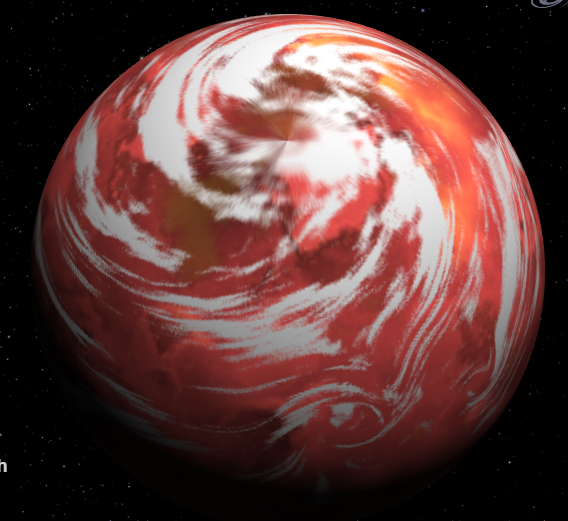

The US space agency NASA has discovered a new Earth. It is being claimed that it is located at a distance of 37 light years from our planet. Whose mass is four times more than ours. This super earth ‘Ross 508b’ moves in and out of its habitable zone. The way our Earth revolves around the Sun. In the same way, it orbits the Super Earth M type star. It takes only 10.8 days in a year. That is, a year is completed here in about 11 days.
Discovery Alert!
A recently discovered exoplanet skims in and out of its star's habitable zone. It's 37 light-years from Earth and about four times our planet's mass, making Ross 508b a super-Earth. A year there, one orbit, takes just 10.8 days! https://t.co/qmEDhIuS3A pic.twitter.com/MW7Cap45If— NASA Exoplanets (@NASAExoplanets) August 3, 2022
Explain that the M type star is redder and colder than the Sun and gives less light. These red stars are found in large numbers around our solar system. They are in three-quarters of our galaxy.
There is a presence of water on this new planet Ross 508b exoplanet. Which is a very important search for exploring the possibilities of life. According to media reports, the list of 5069 discoveries confirmed, 8833 candidates and 3797 planetary systems is ready in NASA’s Exoplanetary Encyclopedia. In which this super earth was discovered in the year 2020.
Astronomers from the University of Cantbury had already seen this undiscovered planet. Which is one of the planets with the same size and mass as Earth. which has a host star, which is about 10 times the mass of the Sun.
Is.
Explain that the mass of SuperEarth is between the Earth and the planet Neptune. According to author Dr Herrera Martin, who is leading this research, this discovery is very rare. Like Earth, the help of Subaru Telescope was taken in the search of this super earth. For which infrared spectrographer was also used.
The rarity of its detection can be gauged from the fact that the host star had about five days to examine the magnification. Whereas the planet was only detected during a short deformation of five hours.