Rescue centers will be opened in every district of Uttarakhand, and the Wildlife Protection Act will be amended!


c


Human-wildlife conflict is becoming a serious challenge for the Uttarakhand state government. Cases of wildlife conflict are being reported frequently in the hilly regions of the state, prompting the Uttarakhand government to take several important decisions. These include opening rescue centers in every district, installing solar fencing for the safety of the people, and developing a security system by implementing a sensor-based alert system to warn residents. A strategy to implement these plans will be finalized within the next two weeks.
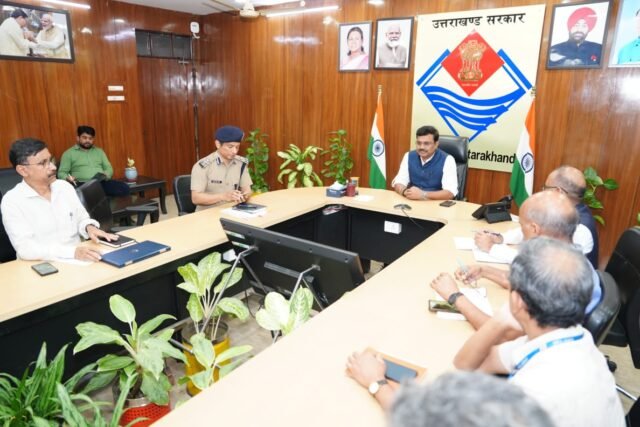
Chief Minister Pushkar Singh Dhami said that human-wildlife conflict has emerged as a major challenge for the state government. People are being injured in attacks by elephants, nilgai, leopards, bears, and monkeys in various parts of the state. Crops are also being damaged. Therefore, in areas of Uttarakhand where human-wildlife conflict is prevalent, solar fencing will be installed in a phased manner to enhance security. A sensor-based alert system will also be implemented to warn people and mitigate human-wildlife conflict.
He added that modern sterilization centers will be established in every district for population control of wild animals, including langurs, monkeys, pigs, and bears. The Forest Department will make all the necessary arrangements for this. In all the districts of the state where human-wildlife conflict is occurring, centers will be opened under the control of the Forest Department for the rescue and rehabilitation of identified wild animals. A rescue center for tigers and leopards already exists in Ramnagar, where approximately 25 tigers and leopards have been rescued. Similar rescue centers will be established for bears and other wild animals.
A minimum of 10 nali (a unit of land measurement) in hilly areas and one acre of land in the plains will be reserved for this purpose. Currently, human-wildlife conflict has become a serious issue for the state, as it is causing significant challenges to the lives of ordinary citizens. This is why, giving top priority to this matter, a strategy will be formulated within two weeks to implement these schemes. The Forest Department will be provided with an additional ₹5 crore for nets, cages, tranquilizers, and other necessary equipment.
To effectively prevent human-wildlife conflict, forest department officials at the ranger level will be further empowered by prohibiting violent animals and decentralizing their management under the relevant provisions of the Wildlife Protection Act. If necessary, the rules will be amended accordingly. Chief Minister Dhami said that he has also spoken to Union Minister Bhupender Yadav so that a request can be made for any amendments required based on the prevailing circumstances.
Human-wildlife conflict is becoming a serious challenge for the Uttarakhand state government. Cases of wildlife conflict are being reported frequently in the hilly regions of the state, prompting the Uttarakhand government to take several important decisions. These include opening rescue centers in every district, installing solar fencing for the safety of the people, and developing a security system by implementing a sensor-based alert system to warn residents. A strategy to implement these plans will be finalized within the next two weeks.
Chief Minister Pushkar Singh Dhami said that human-wildlife conflict has emerged as a major challenge for the state government. People are being injured in attacks by elephants, nilgai, leopards, bears, and monkeys in various parts of the state. Crops are also being damaged. Therefore, in areas of Uttarakhand where human-wildlife conflict is prevalent, solar fencing will be installed in a phased manner to enhance security. A sensor-based alert system will also be implemented to warn people and mitigate human-wildlife conflict.
He added that modern sterilization centers will be established in every district for population control of wild animals, including langurs, monkeys, pigs, and bears. The Forest Department will make all the necessary arrangements for this. In all the districts of the state where human-wildlife conflict is occurring, centers will be opened under the control of the Forest Department for the rescue and rehabilitation of identified wild animals. A rescue center for tigers and leopards already exists in Ramnagar, where approximately 25 tigers and leopards have been rescued. Similar rescue centers will be established for bears and other wild animals.
A minimum of 10 nali (a unit of land measurement) in hilly areas and one acre of land in the plains will be reserved for this purpose. Currently, human-wildlife conflict has become a serious issue for the state, as it is causing significant challenges to the lives of ordinary citizens. This is why, giving top priority to this matter, a strategy will be formulated within two weeks to implement these schemes. The Forest Department will be provided with an additional ₹5 crore for nets, cages, tranquilizers, and other necessary equipment.
To effectively prevent human-wildlife conflict, forest department officials at the ranger level will be further empowered by prohibiting violent animals and decentralizing their management under the relevant provisions of the Wildlife Protection Act. If necessary, the rules will be amended accordingly. Chief Minister Dhami said that he has also spoken to Union Minister Bhupender Yadav so that a request can be made for any amendments required based on the prevailing circumstances.