Uttarakhand’s Chief Minister Pushkar Singh Dhami and a mountain of hope, migration is a big problem
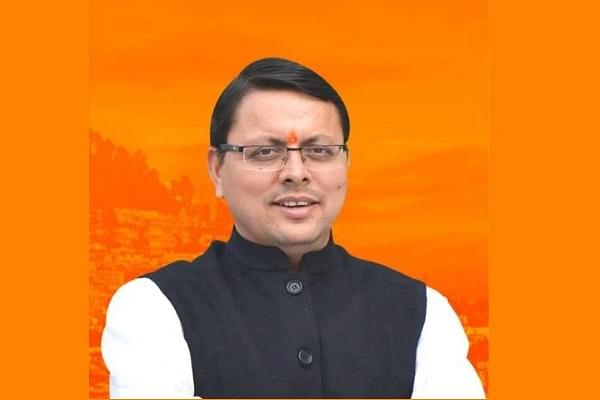
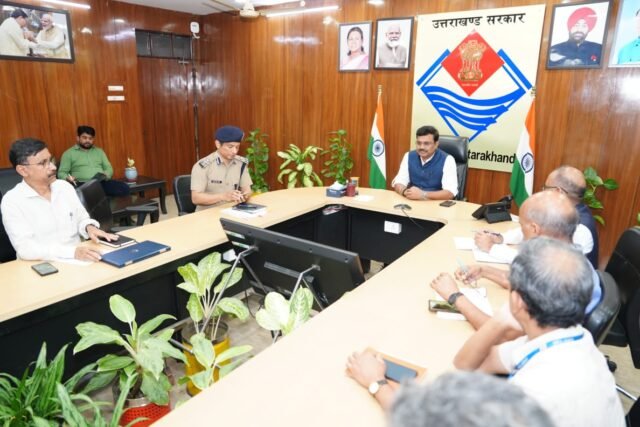
Pushkar Singh Dhami has become the 11th Chief Minister of Uttarakhand and the third Chief Minister of this tenure of BJP. With the young leader taking charge of the state, the expectations of the people of the state are bound to be young. It is not easy to accelerate development work, education, industry and tourism in the seven months left for the elections, which have been derailed by Corona.
In a geographically heterogeneous state like Uttarakhand, youth of the leader is a positive point, but the importance of administrative experience cannot be denied here either. Dhami is handling any responsibility in the government for the first time and that too directly to the Chief Minister. He has got good experienced colleagues in the cabinet, how much cooperation he will be able to take from them, but only good wishes can be given about it. However, despite not having administrative experience, there are many examples of those who perform great responsibility well in the country and the state.
About four months ago, when Tirath Singh Rawat had taken oath, then questions like why, how it happened were floating in the political air of the state. Before Uttarakhandis could get answers to these questions, then the BJP high command placed bets on the young leader. This change, citing constitutional compulsion, also remains a matter of discussion. It is not understood by the common people that why such an issue was not detected by an organized and well-planned party like BJP when the non-MLA Tirath was handed over the crown. Congressmen have already started apprehension of implicating Bengal Chief Minister Mamata Banerjee with this legal trick. If you look at the track record of BJP in the state, there is nothing to change the Chief Ministers.
In the interim assembly constituted at the time of the establishment of the state, the party made Nityanand Swami the Chief Minister. Even then there was open discontent in the organization. Then party MLAs stopped Bhagat Singh Koshyari from attending Swamy’s swearing-in ceremony. In the interim assembly with a tenure of two and a half years, the high command removed Swamy and made Bhagat Singh Koshyari the chief minister for the last four months. In the 2007 assembly elections, when the majority was achieved, the Chief Minister was changed thrice. First Major General (Retd) Bhuvan Chandra Khanduri, then Dr. Ramesh Pokhriyal Nishank and then Bhuvan Chandra Khanduri. In the 2017 elections, he got a historic majority, then three chief ministers. First Trivendra Singh Rawat, Tirath Singh Rawat and now Pushkar Singh Dhami. Why does a party like BJP face the compulsion to change the Chief Minister again and again, people are asking this question. BJP was the only national party in the state whose provincial organization was working even before the formation of the state. The credit for the formation of the state also goes to the government of Atal Bihari Vajpayee. Yet experiments on experiment are still going on to find state level personality and leadership. It is in the interest of the state that this cycle should stop.
If so, where is the instability? In fact, this group of leaders is knowingly or unknowingly keeping a distance from the ground reality. A marginal state like Uttarakhand, which has always been in the mainstream of national politics, remains emotionally attached to its state and the state government. Which party the Chief Minister belongs to, of course, it is important, but who is the Chief Minister and for how long it is also no less important question for the people of the state. Both the parties, which are strong in the state, have been giving less importance to the second question.
The Chief Minister is elected by the MLAs in the Legislature Party meeting, this constitutional arrangement has become a mere formality for both the parties. In the meeting of MLAs, everyone has to accept the name written on the slip of the high command. When Nityanand Swami became the Chief Minister, the support of the MLAs was with Bhagat Singh Koshyari. Even when ND Tiwari and Vijay Bahuguna became chief ministers, the support of most of the MLAs was with Harish Rawat. The MLAs choose the Chief Minister, everyone knows how grounded this provision is. It has also come to the notice that both the parties having good network across the state have been keeping the public opinion on the margins while choosing the head of the state. At times, the party high command’s own equations outweigh the merits, leadership abilities, character, popularity, electoral skills, party loyalty. When the experiment seems to be failing, the chief minister is replaced. It was also observed that in the first round of the term, loyalists are elected, but as the election approaches, the search is on for the winner. For the latter it is like a crown full of thorns. In the first government of Uttarakhand, Bhagat Singh Koshyari got the last five months to run the government. During the tenure of the third assembly, Bhuvan Chandra Khanduri got the last seven months. At present, Pushkar Singh Dhami also has only seven months left for work.
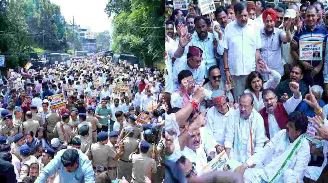
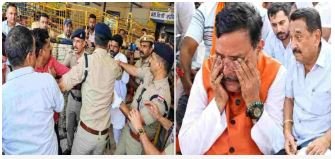
The storm of discontent is calm for the time being : As soon as Dhami’s name was announced, some senior party leaders did not hesitate to publicly display their displeasure and disappointment. To persuade senior leaders like Satpal Maharaj, Dr. Harak Singh Rawat, Bishan Singh Chufal, not only the big leaders of the state, but the party high command also had to be active and the joint efforts were successful. Now the atmosphere is calm. The young Chief Minister is also seen trying to take everyone along. Only time will tell whether this is an immediate break or a permanent reconciliation. The dissatisfaction which appeared and from where it appeared, its motives were also different. On the one hand, those veterans showed dismay, who this time were looking for their own numbers for the chair of the chief. Secondly, he expressed dissatisfaction with those who were skeptical about getting a place in the cabinet again or feared to get less importance, because Dhami was not as neutral as Tirath in the factional politics of the state BJP. By protesting, he managed to get high level recognition of his place and importance in the BJP. The third factor is also that half of the BJP, which has left the Congress and joined the party during the last few years. Five members are the same in this 12-member cabinet. Nowhere in the future they should be seen as neglected and outsiders, so what better chance to make them feel the power. Well, now everyone has resolved to work together for the development of the state under the leadership of Pushkar Singh Dhami, so raising any apprehension will be said to be the work of the opposition or the product of negative mind. It is also not in the interest of the leaders standing on the threshold of elections, they also understand this very well.
In Uttarakhand, the matter of Tirath Singh Rawat resigning as Chief Minister and Pushkar Singh Dhami becoming the new Chief Minister is not new to the people of the state. This tradition of resignations is going on since the day when the first Chief Minister Nityanand Swami resigned. There is no doubt that the desire to see Uttarakhand developed and full of facilities, which was separated from Uttar Pradesh on November 9, 2000, is still left among the people of the state. Migration has become a major problem of this hill state today. According to statistics lakhs of hill people are settled in Delhi. Burari and Santnagar have become like other Uttarakhand. While migration is threatening the culture and customs of one state, other states are also bearing the burden of increasing population. Due to this many problems are arising – from the supply of resources to environmental pollution.
According to the data, around 1,18,981 people have migrated permanently from 3,946 villages of Uttarakhand. Hanging locks and spider webs on the houses are expressing a different woe. This migration can be stopped only when there will be development and people will have access to those basic facilities – health, education and employment, in whose desire they are compelled to leave their native land and move to big cities. And these facilities will reach them only when there is a stable government in the state, but here the situation is staggering. The appointment of 11 Chief Ministers in the last four assembly elections is very sad. Even today the public does not know in whose hands the command of their state will be in the future. Uttarakhand is full of natural wealth. The story of the development of this hill state should be written using them. Now the new Chief Minister should focus his attention on the basic problems of the people of the state.