
17th century ‘treasure’ found while digging in a cashew field, Archeology Department will give credit to the farmer by keeping it in the museum

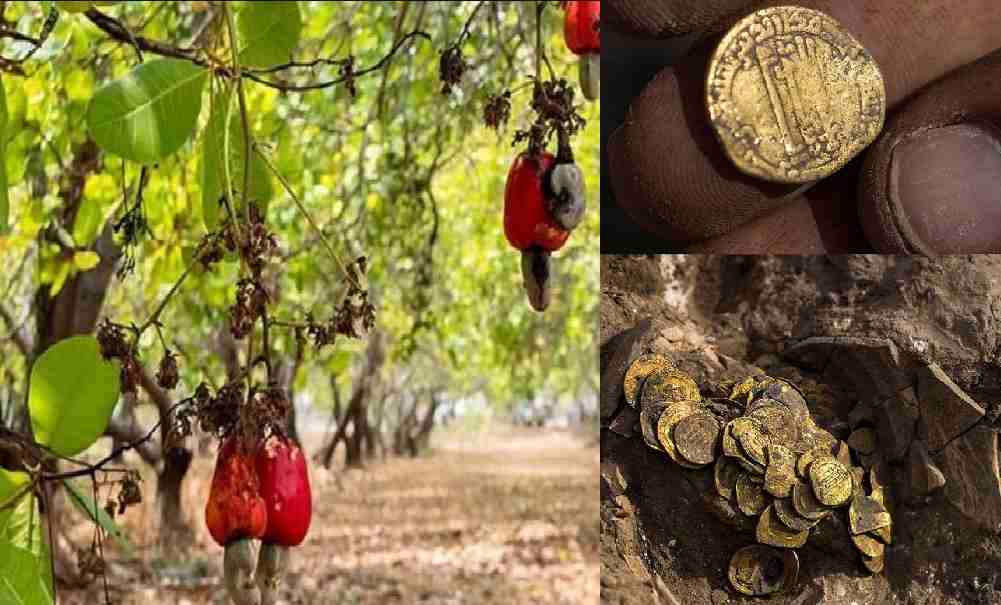


Sometimes you find some amazing things on the roadside or at some historical place, which are priceless. Something similar was seen in Nanoda Bamber village of North Goa, where a farmer named Vishnu Shridhar Joshi was doing cleaning and digging work in his cashew plantation. At the same time, the farmer’s eyes fell on a vessel buried in the soil. The farmer says that when he dug deeper and removed the soil, he found a vessel in which there were many coins of the bygone era.
Copper coins said to be from the 17th century
It is said that the number of coins found by farmer Vishnu Shridhar Joshi during excavation is 832 and these are of copper. These coins are believed to have been minted in Goa around the 16th or 17th century, when Goa was under Portuguese rule. This rare discovery made by the farmer was studied by the Archeology Department of Goa, which revealed that the coins found by the farmer give information about trade relations, commerce and economic history of Goa during the early years of Portuguese rule. .
Farmer informed officials, archaeological team seized coins
Regarding this, the farmer says that after finding such a huge number of coins, he was surprised as to what to do with these coins. Nothing was understood, after which he brought these coins to his home and after sharing information about the matter with the village Panch, the incident was informed to the government officials. Meanwhile, on Wednesday, Goa State Archeology Minister Subhash Phal Desai and a team of department officials visited the village and took all the coins in their possession. Officials of the Archeology Department say that a study is going on on this treasure found in the cashew field. This treasure can provide further important information about the numismatic history of Goa.
Dr Nilesh Phal Desai, Director of the Department of Archaeology, said that at first glance, the letters and symbols on the coins appear to indicate that the coins were issued in the 16th or 17th century, during the early years of Portuguese rule. On some of the coins encountered, a cross and an alphabet can also be seen on one side, which may be the initials of a king ruling at that time, during whose reign these coins may have been issued. However, experts are continuing to investigate when these coins were minted and circulated in order to understand the commercial trade relations at that time.