Pads, water and privacy… Worse condition of women in war-torn Gaza, taking medicine to stop periods

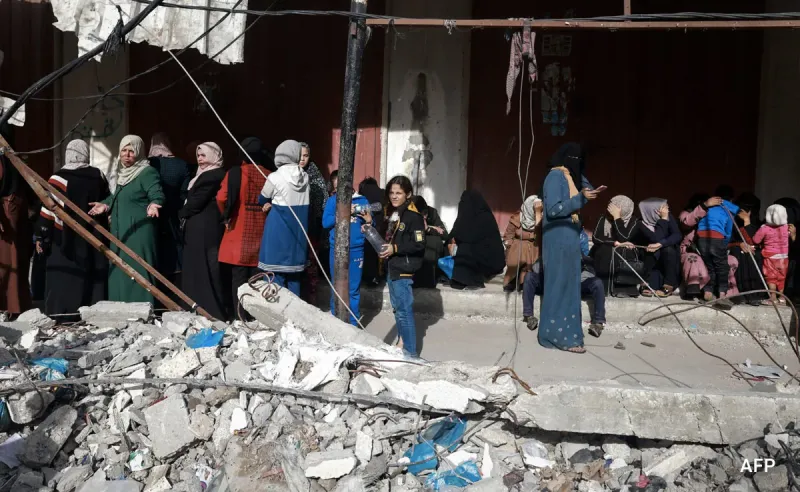


There is a war (Israel-Hamas War) going on between Israel and the Palestinian organization Hamas since October 7. In between there was a 6-day ceasefire agreement (Israel-Hamas Ceasefire Truce). During the ceasefire from 24 to 29 November, Hamas released some hostages. In return, Israel also freed the Palestinian prisoners. As soon as the ceasefire ended, Israel intensified air and ground attacks on Gaza Strip. Amidst the Hamas-Israel war, the people of Gaza are in need of basic amenities of life. About 80 percent of the 2.4 million people have been displaced. The situation of women in Gaza is getting worse every day. They are not getting as much privacy as before in changing clothes and taking bath. Women and girls have to go through a lot of trouble especially during periods. This is affecting his health.
According to the report of news agency AFP, amidst the war, women in Gaza are not even able to get sanitary napkins to be used during menstruation. Apart from this, due to living in crowded places, they are also facing a lot of trouble in taking care of their cleanliness. Facing all these situations, women and girls are forced to use diapers or cotton clothes during periods. Due to this there remains a risk of infection. At the same time, some women are using medicines to postpone periods. Health experts are expressing concern over such situations.
Goods are not being supplied due to Gaza blockade
Actually, the main reasons behind this are lack of cleanliness, water and other medicines in Gaza. Due to the blockade of Gaza, no goods are reaching there. In Gaza, these women are not able to get sanitary napkins, menstrual cups and even medicines to prevent problems occurring during periods. Women struggling with these difficulties are not even able to go to doctors for advice. Because hospitals are already loaded due to war. The health system has collapsed in most hospitals.
“I cut up my baby clothes or whatever fabric I can find and use them as sanitary pads during my periods,” said Hala Ataya, 25, in the southern city of Rafah. “I can barely bathe every two weeks during my periods.” There is always a fear of infection due to this.”
Suffocation due to the smell of toilet
Hala Ataya had to leave her home in northern Gaza amid the war. Now she is living as a refugee with her three children in a school run by the United Nations. Here they have to share toilets with hundreds of people. There is a fight for drinking water here. In such a situation, thinking about bathing water seems like a big deal. There is no cleanliness in the toilet. The smell causes suffocation.
Roads turned into open toilets
The streets of Rafah, bordering Egypt, have been transformed into open toilets. Piles of garbage have covered the city. Rafah has now become a big refugee camp. Here most Gazans have been stopped from leaving the area. So people are stuck here. They have neither food nor water.
On October 7, Hamas fired more than 5 thousand rockets from the Gaza Strip towards Israel. 1200 Israeli people were killed in these attacks. Since then Israel is retaliating on Gaza Strip. According to the latest figures from the Health Ministry in Hamas-run Gaza, about 18,000 Palestinians have been killed in Israeli military retaliation.
Increased risk of skin rashes and infection
“We have gone back to the Stone Age,” says Samar Shalhoub, an 18-year-old displaced from Gaza City. “There is no security. There is no food and water. There is no sanitation. I am ashamed.” , I feel insulted.” Due to non-availability of sanitary pads, Shalhoub is forced to use old torn clothes during her periods. Due to this they complain of skin rashes and infections.
Sales of contraceptive pills increased four times
“Sales of contraceptive pills have quadrupled because women want to control their periods,” said Marie-Auré Perreaut Riviel of Doctors Without Borders (MSF). An NGO said, “There is nothing there. There is no privacy to change clothes. There is no soap to keep oneself clean during periods.”
Ahlam Abu Barika, now in her third month of displacement, described personal hygiene as a “daily battle.” She says, “Women wear diapers or baby cloth. There is not enough water for cleanliness.” Abu Barika is giving less food to her five children to control their going to the toilet. She herself is eating very little. By reducing food intake, his weight has reduced by 15 kg.
Another NGO, Action Against Hunger, said that many women had menstrual blood stains on their clothes. She was forced to continuously use such diapers or cotton clothes. There was a risk of infection.”
Diaper has to be cut and used
A school classroom has been converted into a bedroom for displaced Gazans. Hundreds of people are living in one class. Umm Saif is also included in these. She said that her five daughters use baby diaper pampers during their periods.
Diaper prices have almost doubled since the war. That’s why Umm Saif has cut the diaper into two pieces. That means four daughters are managing in two diapers. One daughter has to use cotton clothes.
Salma, a resident of Gaza, says, “I am experiencing the most difficult days of my life during this war. Due to depression, I had to go through periods twice this month.” At the same time, 55 year old Samira Al Saadi is very disappointed. His 15 year old daughter has got her periods for the first time. She is worried that her daughter will get upset if she does not get basic needs like sanitary pads and water.