‘The party has always had…’, What did Tharoor say about the allegations of having a different ideology than Rahul Gandhi?

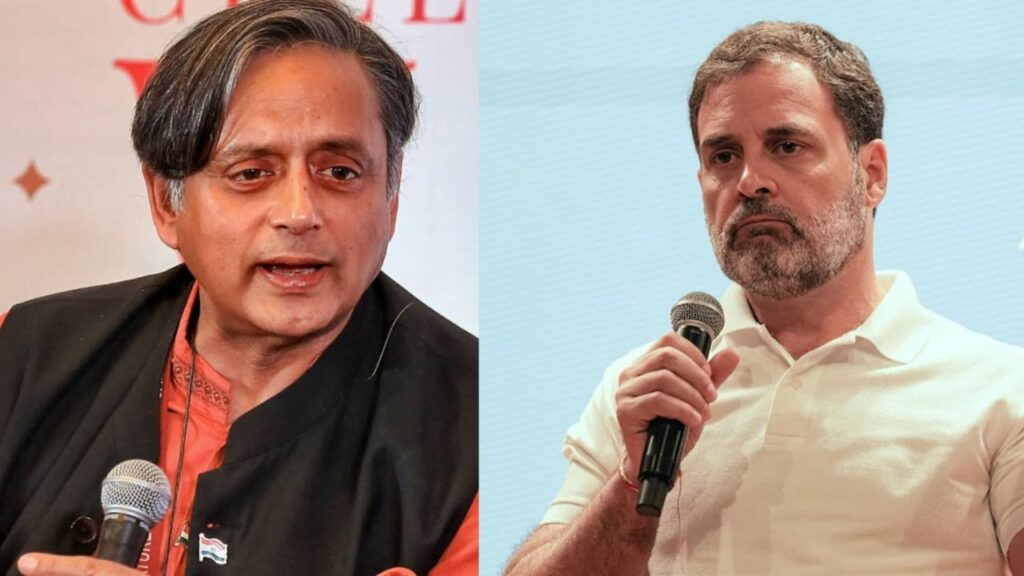
rahul gandhi shahsi tharoor


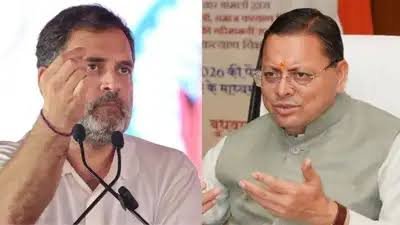
There has been a long-running debate within the Congress party regarding ideological differences. A comment by Shashi Tharoor on an analysis by a Twitter user has sparked a new discussion. The user wrote that Shashi Tharoor and Rahul Gandhi represent two different ideologies within the Congress party. One is driven by an urban, institutional, and reformist approach, while the other follows a rural-centric, populist party strategy. Responding to the user’s analysis, Congress leader Shashi Tharoor wrote, “Your analysis is insightful. There have always been more than one tendency within the party; your framing reflects the current reality.”
According to an analysis by a Twitter user, there are two main ideologies within the Congress party today: one represented by Shashi Tharoor and the other by Rahul Gandhi. The problem is not the coexistence of these two viewpoints, but rather the fact that the Congress is unable to choose one or integrate both.
What was said about Tharoor?
Tharoor is associated with the Congress trend that emerged in the 1990s: an urban face, an institutional approach, and a favorable stance towards economic reforms. This was a period of economic transition and elite-led governance. Leaders like P.V. Narasimha Rao, Manmohan Singh, S.M. Krishna, and Montek Singh Ahluwalia relied on policies, institutions, and administrative efficiency, not on mass movements or cultural engagement. However, this urban, technocratic leadership has repeatedly been marginalized within the Congress. Ironically, these leaders received more respect from the right-wing camp than from today’s Congress.
What was said about Rahul Gandhi?
On the other hand, Rahul Gandhi symbolizes the strategic shift that the Congress adopted after 2010: presenting itself as a rural, grievance-based mass party to challenge the BJP’s dominance. This shift was reactive, and its failure is evident in the electoral results. The biggest paradox is that the person leading this rural-focused politics is one of the most elite and protected figures in Indian politics.
Symbolic rural politics, without organizational depth, loses credibility. Rural politics in India is driven not just by speeches, but by organization, culture, and long-term engagement. While the BJP is strong through the RSS, the Congress lacks this structure.
Tharoor, in contrast, demonstrates a congruence between his background, political language, and audience. His increasing activity on social media, especially Instagram, reflects this fit. He has never shown a leaning towards the right wing, as some within the party believe. He has always been a proud Hindu and has even written a book on the subject. “Why I am a Hindu”.
What is the conclusion of the analysis?
The conclusion of the analysis is that the Congress party is neither a credible urban reformist party nor a serious rural-based mass party today. It has abandoned one identity but has not successfully adopted another. As a result, its identity is now largely confined to being merely an ‘opposition’ party. Opposition politics without a clear governing ideology leads to decline. And that is the current challenge facing the Congress.